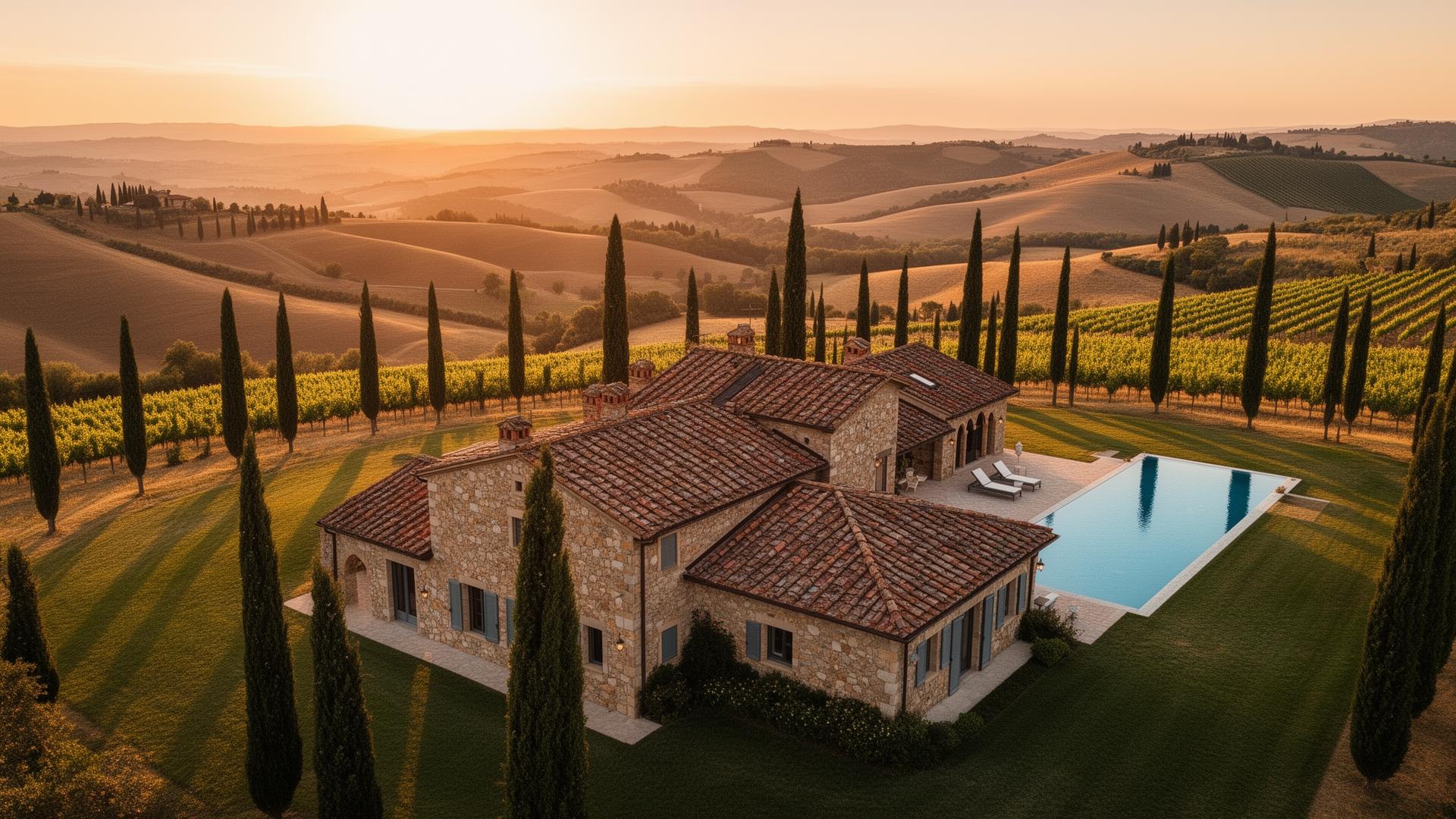
Cortona is a walled hill town in the Province of Arezzo, in the eastern corner of Tuscany where the region meets Umbria. It rises steeply above the Val di Chiana, looks out over Lake Trasimeno, and packs an Etruscan past, two serious museums, and some of the best views in central Italy into a centre you can cross on foot in fifteen minutes. It is also, thanks to Frances Mayes, the most famous small town in Tuscany after Siena.
This guide covers everything you need to plan a trip: what to see, how long to stay, how to get there, where to base yourself, and the day trips that make Cortona one of the best-value hubs in Tuscany. It’s the hub of our site — each section links to a deeper guide.
Why visit Cortona
Most Tuscan hill towns give you one good thing — a cathedral, a square, a view. Cortona gives you several at once, and it does it without the cruise-ship crowds of San Gimignano. The historic centre is genuinely lived-in, the museums punch far above the town’s size, and because it sits on a slope you are never more than a few steps from a view over the valley.
Three things set it apart:
- Depth of history. Cortona was a significant Etruscan city — the lucumonia of Curtun — long before Rome, and the MAEC museum holds first-rank Etruscan finds. Few towns this size offer this.
- The setting. From the upper town the Val di Chiana spreads out below, with Lake Trasimeno shimmering toward Umbria. Sunset from the Girifalco fortress is the reason to stay the night.
- The literary pull. Under the Tuscan Sun turned Cortona into a pilgrimage for readers and film fans, but the town has quietly absorbed the attention without becoming a theme park.
What to see in Cortona
You can see the essentials in a single, well-paced day. The centre is compact but steep — wear proper shoes, because the climb to Santa Margherita is real.
| Sight | What it is | Time needed |
|---|---|---|
| Piazza della Repubblica | The main square, dominated by the Palazzo Comunale and its broad staircase | 20 min |
| Piazza Signorelli | Named for the Renaissance painter Luca Signorelli, born here; home to the MAEC | 20 min |
| MAEC | Museum of the Etruscan Academy and the City of Cortona — Etruscan and Roman treasures | 1.5–2 hrs |
| Diocesan Museum | Holds Fra Angelico’s luminous Annunciation and works by Signorelli | 1 hr |
| Basilica di Santa Margherita | Hilltop basilica with the body of St Margaret of Cortona; panoramic terrace | 45 min |
| Fortezza del Girifalco | The Medici-era fortress at the summit — the best views in town | 1 hr |
| Via Nazionale | The main street (the only flat one — locals call it Ruga Piana); shops and cafés | as long as you like |
The two museums
The MAEC (Museo dell’Accademia Etrusca e della Città di Cortona) is the headline act. Its Etruscan collection includes the famous bronze lamp-chandelier and the Tabula Cortonensis, one of the longest Etruscan inscriptions ever found. The Diocesan Museum, a short walk away beside the cathedral, is small but holds Fra Angelico’s Annunciation — reason enough on its own to buy the ticket.
The climb to Santa Margherita
From the centre, a stepped path climbs past the church of San Niccolò to the Basilica di Santa Margherita and, above it, the Fortezza del Girifalco. It’s a steady fifteen-to-twenty-minute uphill walk and the payoff is the panorama: the whole Val di Chiana, Lake Trasimeno, and on a clear day the hills of Umbria.
How long to stay
A day trip works, but it sells the town short. Here’s how we’d allocate your time:
- Half a day: Piazza della Repubblica, a wander up Via Nazionale, and one museum. Fine if you’re passing through.
- One full day: Both museums, lunch on a side street, and the climb to Santa Margherita for sunset.
- Two nights (recommended): Day one for the town, day two for Cortona’s wine or a day trip. This is the sweet spot — you’ll catch the centre in the quiet early morning and evening, after the day-trippers have gone.
For where to base yourself — inside the walls, down in Camucia, or at a villa in the countryside — see our dedicated guide to where to stay in Cortona.
How to get to Cortona
Cortona sits roughly halfway between Florence and Rome, which makes it an easy add-on to a wider Italy trip.
| From | By train | By car |
|---|---|---|
| Florence | ~1h15–1h30 to Camucia-Cortona (regional) | ~1h30 via A1 |
| Rome | ~2h to Terontola-Cortona (some changes) | ~2h15 via A1 |
| Arezzo | ~20–30 min to Camucia-Cortona | ~40 min |
| Perugia | ~40 min to Terontola-Cortona | ~50 min |
The town has two stations, both in the valley below the walled centre:
- Camucia-Cortona is closest (about 5 km) and handles most regional services. From here a local bus or a short taxi ride brings you up the hill.
- Terontola-Cortona (about 11 km) sits on the main Florence–Rome line and is the better choice for fast trains to and from Rome.
Note that no trains run up to the historic centre itself — the old town is car-restricted (ZTL), so even with a car you’ll park outside the walls (the Parterre and Santo Spirito car parks are the usual choices) and walk in. If you’re staying in the countryside, a car is genuinely useful; if you’re staying in town and doing day trips by rail, you won’t need one.
Eating and drinking
Cortona’s kitchens lean into the food of the Val di Chiana and the Tuscan-Umbrian border: hand-rolled pici pasta, bistecca from the prized Chianina cattle raised in the valley below, wild boar ragù, and pecorino from the surrounding hills. Wash it down with the local red — the area has its own appellation built largely on Syrah, which thrives in this pocket of Tuscany in a way it does almost nowhere else in Italy.
We cover the appellation, the grape, and where to taste in our full guide to Cortona wine.
The best day trips from Cortona
Cortona’s position — on the Florence–Rome line, minutes from the Umbrian border — makes it one of the best day-trip hubs in central Italy. Within roughly an hour you can reach:
- Montepulciano & Montalcino — the two great red-wine towns of southern Tuscany (Vino Nobile and Brunello)
- Lake Trasimeno — beaches, islands and lakeside villages, just over the border in Umbria
- Arezzo — Piero della Francesca’s frescoes and a grand antiques market
- Perugia & Assisi — Umbria’s hill-town capital and the basilica of St Francis
- Pienza & the Val d’Orcia — the postcard Tuscany of cypress-lined roads
Full routes, timings and which to do by train versus car are in our day trips from Cortona guide.
Under the Tuscan Sun: the real Cortona
If you know Cortona at all, you probably know it through Frances Mayes. Her 1996 memoir Under the Tuscan Sun — the story of buying and restoring a villa called Bramasole just outside town — became a global bestseller and, in 2003, a film starring Diane Lane. The book put Cortona on the map for a generation of travellers.
Bramasole is a private home and not open to visitors, but the town and landscape that fill the book are all around you. We’ve mapped what’s real, what was filmed elsewhere, and how to experience the Under the Tuscan Sun Cortona respectfully in our dedicated guide to Under the Tuscan Sun in Cortona.
When to go
Cortona is a year-round town, but the shoulder seasons are best:
- May–June and September–October are ideal — warm, long days, harvest energy in autumn, and fewer crowds than midsummer.
- July–August is hot and busiest, but it’s also when the town comes alive with festivals, including the long-running Cortona Mix Festival and Tuscan Sun Festival events.
- Winter is quiet and atmospheric; some restaurants and smaller B&Bs close, but you’ll have the views to yourself.
Plan your trip
Start with the guide that matches your next decision:
- Where to stay in Cortona — inside the walls, in Camucia, or a countryside villa
- Cortona wine — the DOC, the Syrah, and where to taste
- Day trips from Cortona — the routes and how to do them
- Under the Tuscan Sun in Cortona — the book, the film, and the real places
Frequently asked questions
Is Cortona worth visiting?
Yes. Cortona is one of the most rewarding hill towns in eastern Tuscany: an intact Etruscan-medieval centre, two excellent museums, sweeping views over the Val di Chiana and Lake Trasimeno, and a relaxed pace that rewards an overnight stay rather than a rushed day trip. It is also the setting for Frances Mayes's Under the Tuscan Sun.
How many days do you need in Cortona?
Two nights is the sweet spot. One full day covers the historic centre — Piazza della Repubblica, the MAEC and Diocesan museums, and the climb to Santa Margherita and the Girifalco fortress. A second day frees you to taste Cortona DOC wine or take a day trip to Montepulciano, Lake Trasimeno or Arezzo.
What is the nearest train station to Cortona?
Camucia-Cortona, in the valley about 5 km below the old town, handles most regional trains. Terontola-Cortona, about 11 km away, sits on the main Florence–Rome line and is better for fast connections to Rome. Both link to the historic centre by local bus or taxi.
Is Cortona the town from Under the Tuscan Sun?
Yes. Frances Mayes bought and restored a villa called Bramasole just outside Cortona, and her 1996 memoir Under the Tuscan Sun — later a 2003 film with Diane Lane — made the town internationally famous. Bramasole is a private home and is not open to visitors.